























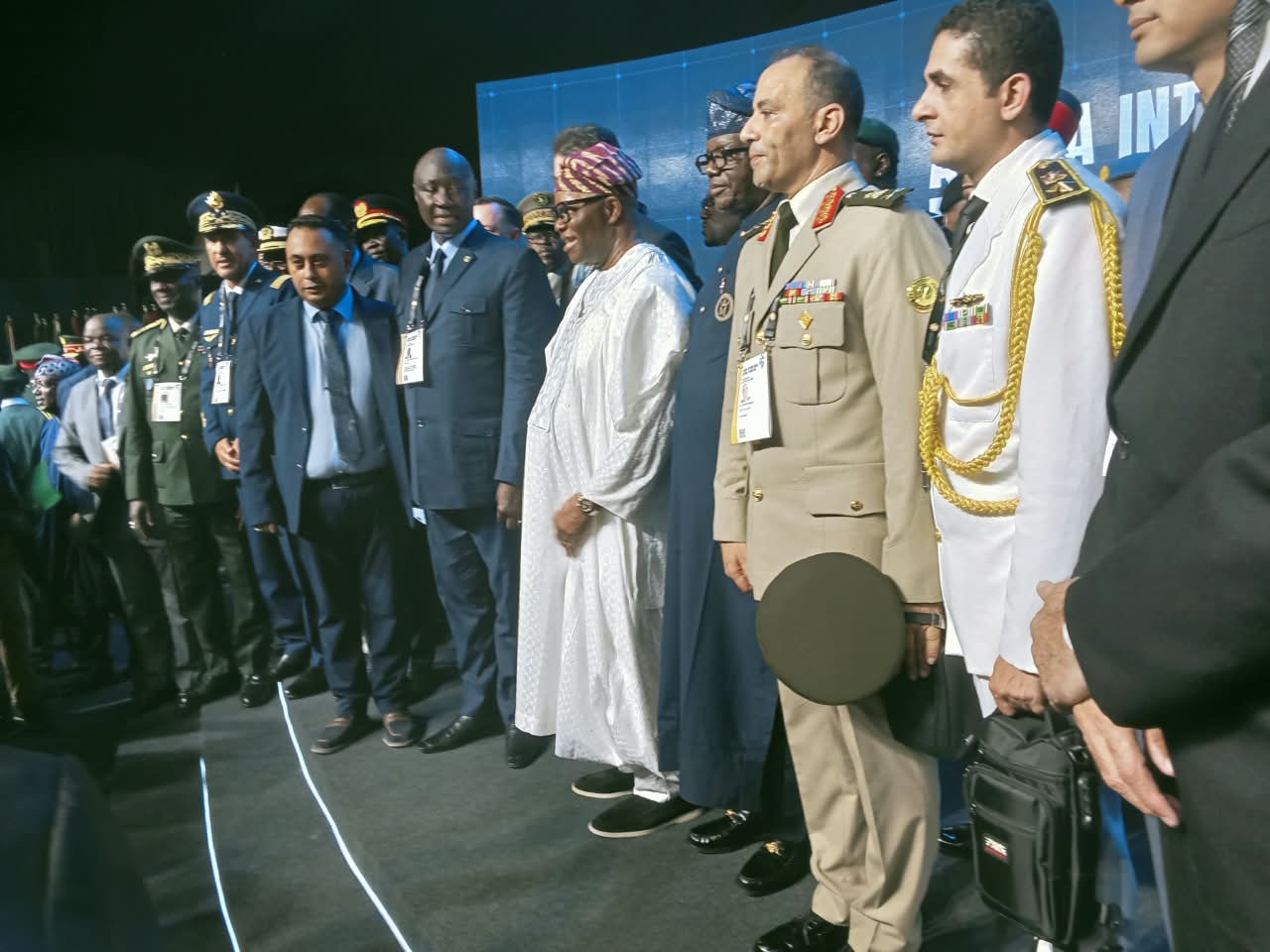
By Philip Nwosu

President Bola Ahmed Tinubu has called on African countries to strengthen indigenous defence industries, promote technology transfer and deepen military cooperation to address growing security threats across the continent.
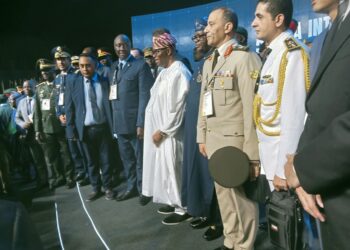
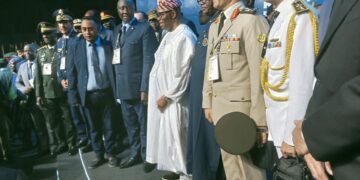
Tinubu who was represented by the President of the Senate, Godswill Akpabio at the opening of the Africa International Defence Exhibition (AFRIDEX) 2026 in Lagos, said Africa must develop the capacity to produce, maintain and sustain its defence equipment rather than depend solely on foreign suppliers.
He said defence partnerships should deliver lasting benefits through skills development, knowledge transfer, industrial growth and stronger national institutions.
“Every major acquisition should help develop skills, transfer knowledge, strengthen local industries and deepen our capacity to maintain what we operate,” he said.
According to him, the success of any defence partnership should be measured by the capabilities it leaves behind, stressing that African engineers must acquire expertise, local enterprises must grow and institutions must become stronger.
Tinubu said the growing complexity of security threats, ranging from terrorism and insurgency to piracy and cyber threats, required African countries to adopt a coordinated approach to protecting their citizens and safeguarding the continent’s future.
“The threats confronting us are becoming more complex and much more interconnected. They threaten lives and livelihoods and disrupt trade. They even weaken the foundations of development of many African countries,” he said.
He added that Africa’s security must receive collective attention because sustainable economic growth could not be achieved where citizens lived in fear.
Akpabio described Lagos, the host city, as a major Centre of African commerce and a gateway to the continent’s maritime domain, noting that security and economic prosperity were closely connected.
He said AFRIDEX 2026 should provide a platform for military experience to inform innovation, industries to strengthen national capabilities and partnerships to produce practical solutions to Africa’s security challenges.
“Our purpose here is very clear: to help build an Africa capable of defending its people and securing the peace upon which progress depends,” he said.
The Senate President said Nigeria understood the devastating consequences of insecurity, including loss of lives, displacement of communities, disruption of livelihoods and the denial of economic opportunities.
He commended the Nigerian Armed Forces for their sacrifices in confronting terrorism, insurgency, banditry, piracy and other transnational threats, while paying tribute to personnel who had died in the line of duty.
He said their sacrifices imposed an obligation on political leaders to provide serving personnel with the equipment, training, leadership and institutional support needed to carry out their responsibilities.
Akpabio, however, noted that military operations alone could not guarantee lasting security, emphasising the importance of strong institutions, public trust, reliable partnerships and sustainable defence capabilities.
He also called for adequate and predictable funding, equipment and sustained institutional support for African-led peace operations, saying personnel deployed to maintain peace must be properly equipped to fulfill their assignments.
On maritime security, he identified the Gulf of Guinea as a strategic area for trade, energy security and shared prosperity, urging African countries to strengthen cooperation to protect legitimate commerce and deny criminal networks safe havens.
“We must strengthen maritime cooperation so that legitimate commerce can flourish and criminal networks find no sanctuary,” he said.
Akpabio also urged African governments to prepare for emerging security challenges associated with cyber capabilities, space technologies, artificial intelligence and autonomous systems.
He said the continent must invest in the knowledge, institutions and technical expertise required to understand and responsibly deploy these technologies while developing indigenous solutions.
According to him, Africa’s young population possesses the talent needed to contribute to defence innovation, but governments must create opportunities for young people to acquire the necessary skills and participate in the development of local industries.
He said Nigeria was advancing indigenous defence production, strengthening cooperation with trusted international partners and developing capabilities suited to evolving security threats.
Akpabio stressed that such investments must build sustainable national capacities and directly contribute to protecting citizens.
He also reaffirmed that the Nigerian Armed Forces must operate within their constitutional responsibilities, with their strength anchored in professionalism, discipline, respect for human rights and democratic civilian authority.
“The confidence of the Nigerian people is an essential foundation of our national defence,” he said.
Addressing international partners, Tinubu welcomed responsible investment and collaboration that would promote meaningful technology transfer and create lasting value for African countries.
He urged foreign partners to work with African governments to develop local industries, train personnel and strengthen the institutions required to sustain security.
He said Nigeria was prepared to contribute to continental defence cooperation across land, sea, air and emerging operational domains.
Tinubu also called on African leaders and chiefs of defence to ensure that the discussions and agreements reached at AFRIDEX 2026 translated into practical outcomes beyond the exhibition.
He identified joint training, intelligence sharing, stronger defence industries and improved interoperability among African military forces as key areas requiring sustained collaboration.
According to him, the continent possesses the human resources, natural resources and ingenuity needed to strengthen its security architecture, but these advantages must be matched with investment, coordination and the political will to act decisively.
He said the ultimate beneficiaries of improved security should be ordinary citizens, including farmers returning safely from their fields, children attending school without fear and traders moving freely across markets.
Earlier, the Minister of Defence General Christopher Musa said Nigeria is seeking strategic partnerships with international defence equipment manufacturers to boost local production of military hardware and strengthen the country’s capacity to tackle evolving security threats.
The minister said the government expects the Africa International Defence Exhibition (AFRIDEX) to provide a platform for agreements that would enable Nigerian companies to collaborate with foreign firms in the production of military equipment for Nigeria and other African countries.
General Musa expressed optimism that agreements reached during the event could translate into concrete manufacturing partnerships within the next year.
“I want at the end of this event, agreements will be signed. And probably in the next one year, we’ll have Nigeria working with each company that is here represented today in the production of military hardware for our countries,” he said.
He described the proposed partnerships as a mutually beneficial opportunity, arguing that Nigeria’s population, landmass and strategic reach, combined with Africa’s demand for defence equipment, presented significant investment opportunities.
“Nigeria has the population, has the land mass, and has the reach. And Africa has the requirements for this. So anybody who invests in Nigeria is investing wisely,” the minister said.