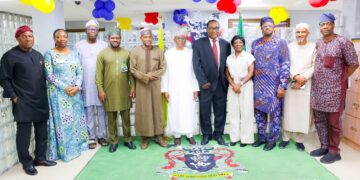





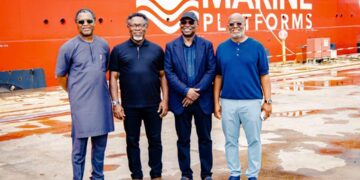









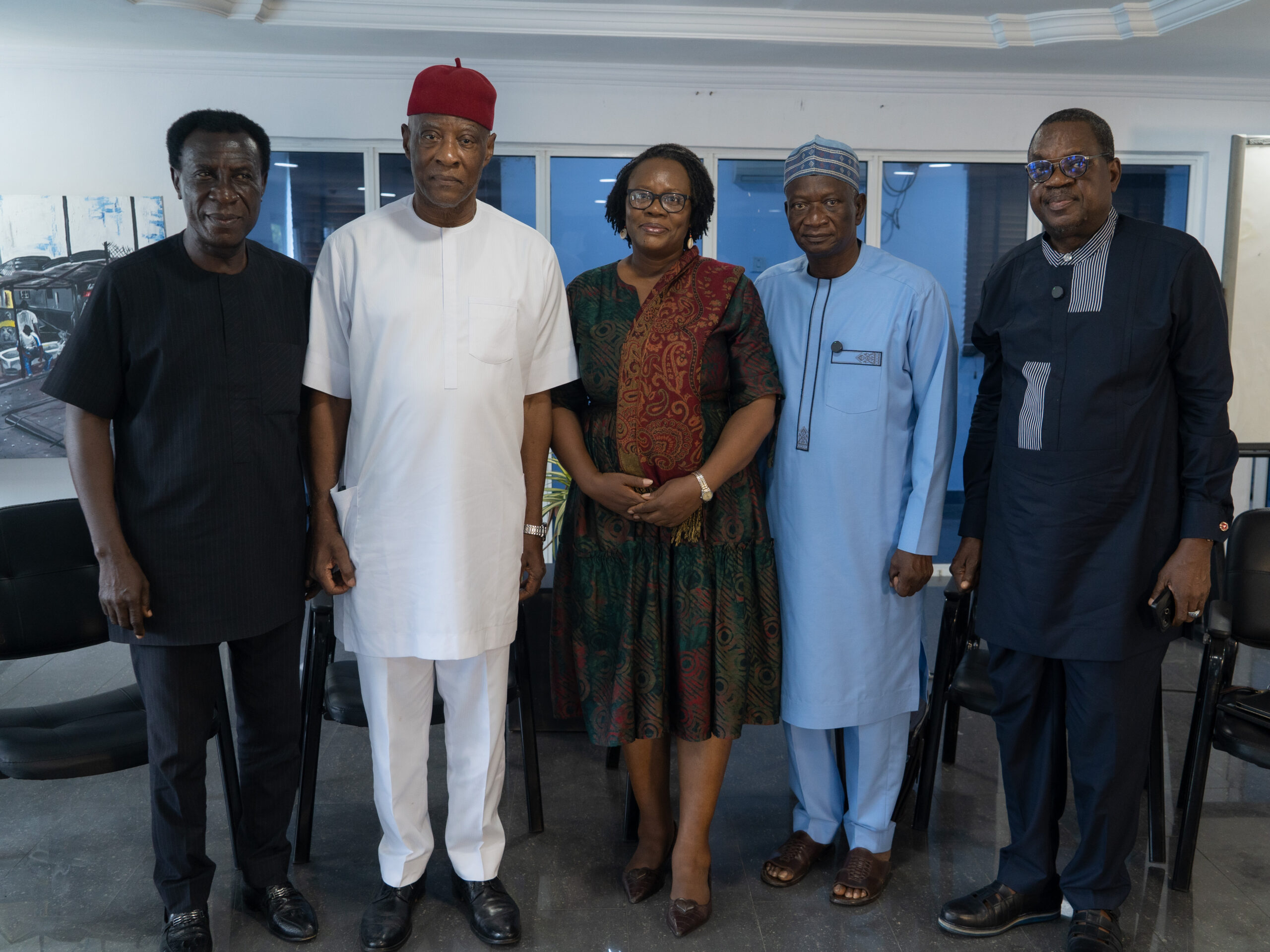










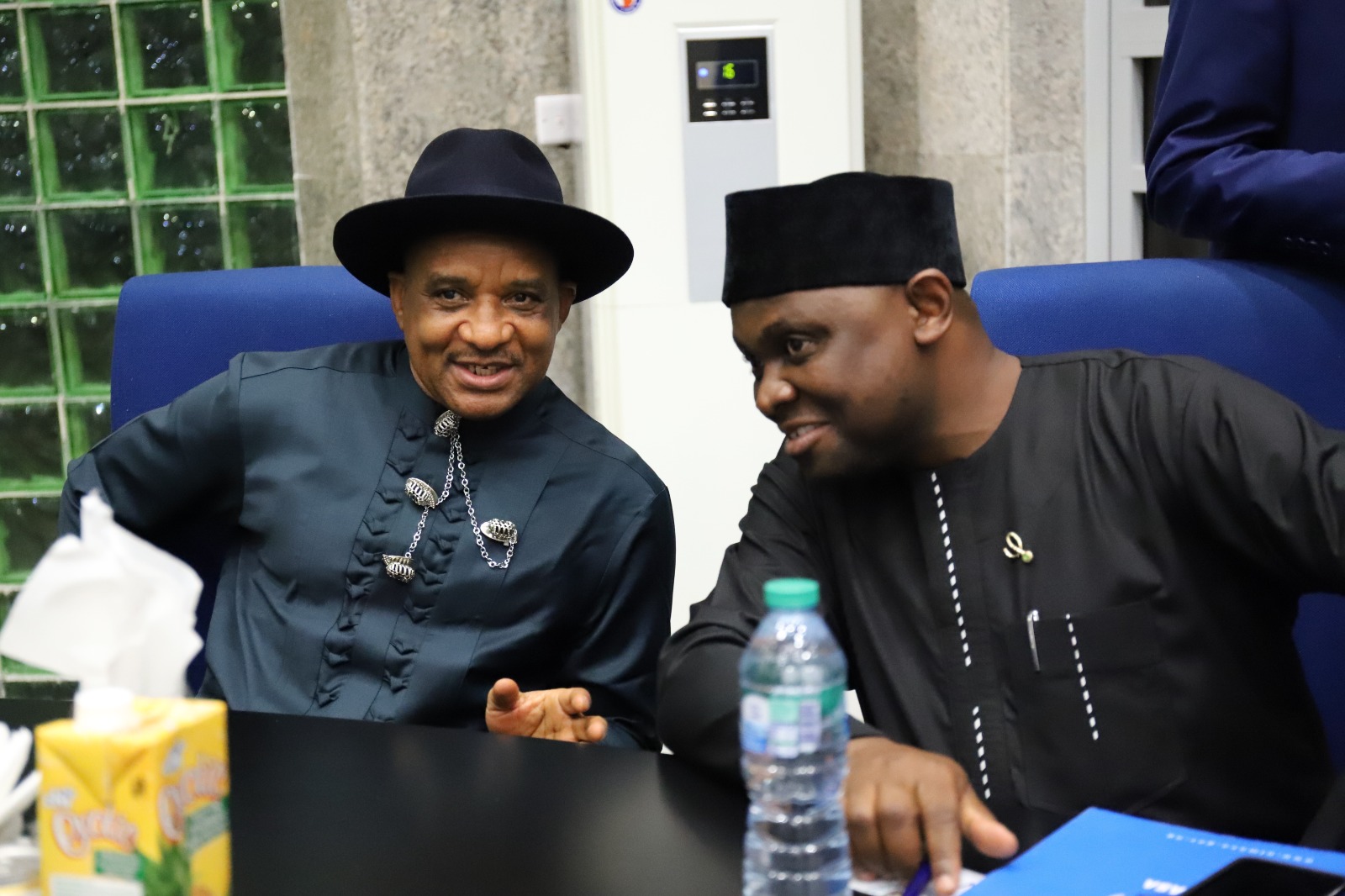



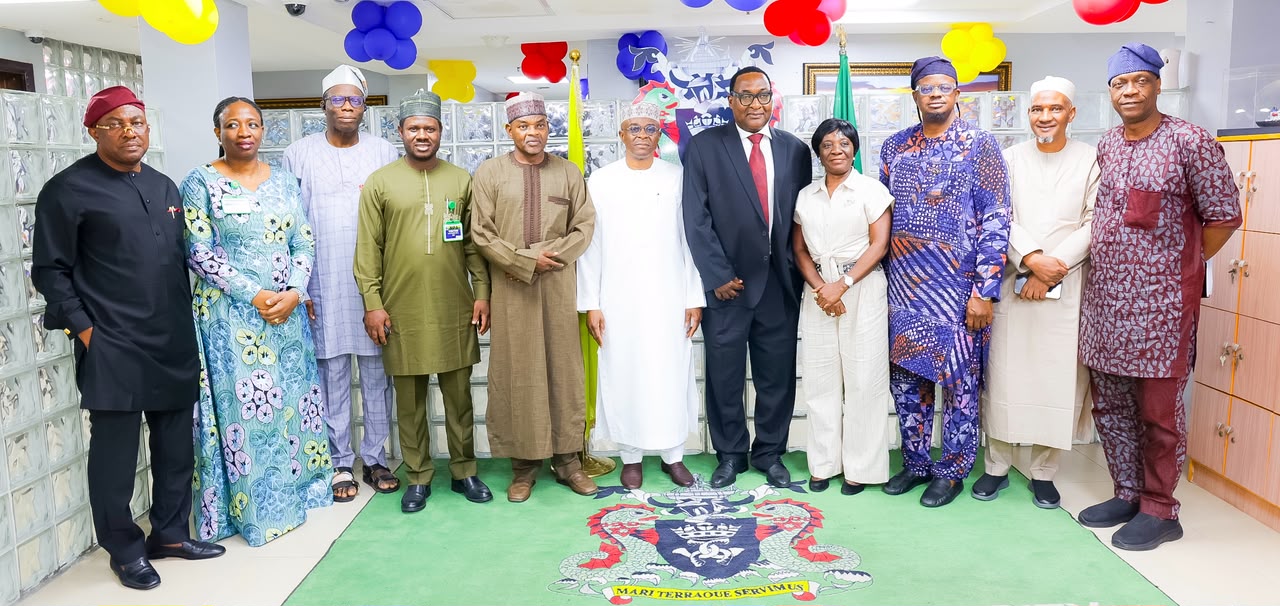
The Management of the Nigerian Ports Authority (NPA), led by the Managing Director, Dr. Abubakar Dantsoho, received the Executive Director of Dala Inland Dry Port, Mr. Ahmad Rabiu, and representatives of Funtua Inland Dry Port, at the NPA Corporate Headquarters, Marina, Lagos.

The familiarisation visit follows the strategic directive of the Honourable Minister of Marine and Blue Economy, Dr. Adegboyega Oyetola, transferring the operational oversight of Inland Dry Ports to the NPA. The high-level engagement was aimed at streamlining port operations, deepening institutional collaboration and advancing Ease of Doing Business across Nigeria’s maritime logistics network.
Speaking during the meeting, Dr. Dantsoho emphasised the need to align hinterland logistics with ongoing upgrades at the nation’s seaports, particularly the $1 billion loan facility secured for the comprehensive modernisation of Apapa and Tin Can Island Ports.
“For our Inland Dry Ports to function at the same velocity as the ongoing modernisation across our seaports, we must proactively upgrade dry port infrastructure and technical capacity,” Dr. Dantsoho stated. “As we integrate digital systems such as the Port Community System (PCS) and the National Single Window in our seaports, the dry ports must deploy modern equipment and advanced technical capabilities to handle larger cargo volumes and bigger vessels coming to our coast.”
Dr. Dantsoho commended existing private sector initiatives, citing APM Terminals’ establishment of an Export Processing Terminal in Northern Nigeria, while calling for increased private investment in the dry port ecosystem. He assured stakeholders that “the journey toward an optimised inland port system is just beginning,” and confirmed plans for official visits to both Dala and Funtua facilities.
Speaking on behalf of the delegation, Mr. Hassan Bello expressed appreciation for the seamless transition of oversight to the NPA. He referenced the gazetted Port Act, which designates Inland Dry Ports as official ports of origin and destination, and highlighted critical operational challenges facing hinterland hubs, particularly rail connectivity and systemic logistics constraints.
The bilateral discussions established a framework for technical consultation, infrastructure integration and physical planning, and provided an opportunity to identify key considerations relating to infrastructure access, site conditions and project planning within the Dry port environment.
The matters raised underscore the need for further technical assessment and stakeholder coordination before final project decisions are made. A structured follow-up process, supported by physical inspection and technical review, will help establish a clearer basis for subsequent project development.