













































The Nigerian Ports Consultative Council (NPCC) has intensified its push for seamless, transparent and predictable port operations, calling for stronger inter-agency coordination and faster processes to improve Nigeria’s competitiveness in regional and international trade.

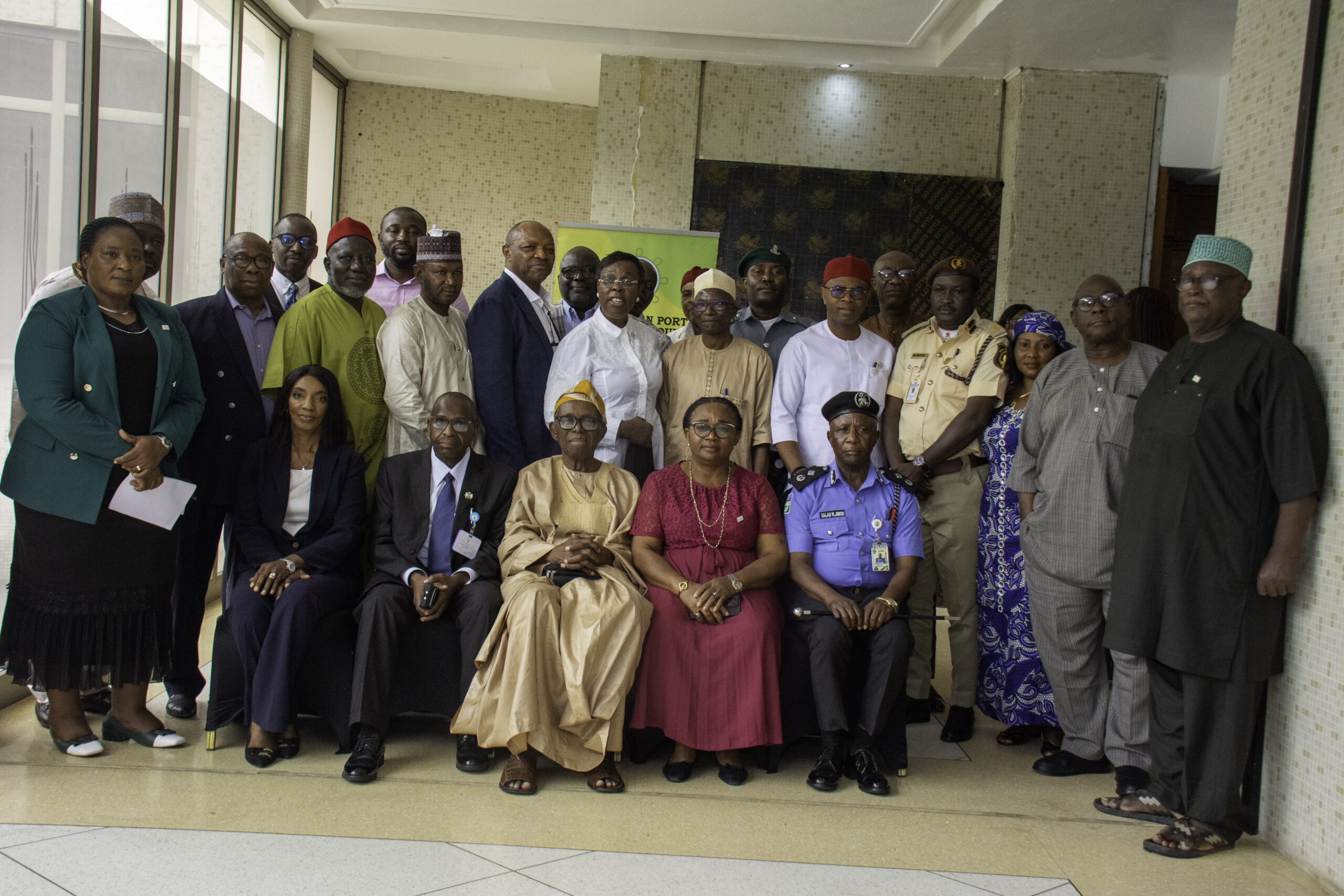
The Council made the call at its quarterly meeting held Thursday at the Federal Palace Hotel, Lagos, with stakeholders examining measures to simplify cross-border trade and enhance ease of doing business at Nigerian ports.

The meeting, themed “Simplifying Cross Border Trade and Enhancing Ease of Doing Business at Our Ports,” brought together representatives of government agencies and maritime industry stakeholders to review operational challenges and seek practical solutions.
Chairman of the Council, Mr. Bolaji Sunmola, expressed concern over persistent challenges confronting Nigerian ports, including the resurgence of traffic gridlock around Lagos ports.
He said the long-standing aspiration of positioning Nigerian ports as a hub for West and Central Africa would remain difficult to achieve without addressing the operational and infrastructure bottlenecks affecting trade.
According to him, the NPCC exists to bring stakeholders with real operational challenges together with relevant government agencies to develop practical solutions.
“We want each of the agencies to come here, feel free, talk, say what you’ve been doing, say what solutions you are offering to the millions of challenges we have,” Sunmola said.
Against the backdrop of the Council’s push for streamlined port processes, the Nigerian Maritime Administration and Safety Agency (NIMASA) announced that its Maritime Electronic Management System (MEMS) is now live.
Director-General of NIMASA, Dr Dayo Mobereola, represented by the Director of Shipping Development, Abdullahi Yelwa, said the platform would strengthen digital traceability, improve visibility into vessel movements and operational records, and support faster regulatory decisions.
He said MEMS would deploy centralised data, automated alerts and smart invoicing to improve documentation, reduce manual processes and strengthen compliance.
The system would also improve tracking of services such as waste reception through time-stamped records and clearer billing trails, while its monitoring and alert functions would support earlier responses to marine pollution incidents.
Mobereola said ease of doing business begins before a vessel arrives at the port, requiring predictable pre-arrival requirements, timely certification, proportionate inspections and prompt resolution of regulatory issues.
Mobereola disclosed that the Federal Government is targeting a reduction in average cargo clearance time from 21 days to under seven days, but cautioned that technology alone would not achieve the target.
He maintained that reliable systems, accurate data, clear service standards and disciplined cooperation among agencies operating within the port and border environment would be required.
Meanwhile, the Vice Chairman of the NPCC, Mrs Jean Chiazor Anishere SAN, said Nigerian ports must move beyond simply functioning to becoming seamless, transparent, predictable and business-friendly gateways for trade.
“Where processes are fragmented, duplicated or unnecessarily prolonged, the cost is ultimately borne by the trading public and the Nigerian economy,” Anishere said.
She challenged stakeholders to assess whether traders can move cargo through Nigerian ports with fewer physical interfaces, fewer documents, reduced delays and greater certainty about cost and time.
Anishere stressed that port efficiency cannot be achieved by one institution working in isolation, noting that the NPCC’s quarterly engagements were designed to bring agencies and industry stakeholders together to identify bottlenecks and develop coordinated solutions.
She said the Council would continue to engage relevant stakeholders and ensure that its recommendations are brought before the Ministry of Marine and Blue Economy.
The NPCC Vice Chairman also identified efficient dispute resolution mechanisms, particularly maritime and commercial arbitration, as important to investor confidence and participation in international trade.
The meeting also featured presentations from relevant agencies on port performance during the period under review, as well as feedback from Council members on operational challenges affecting trade.