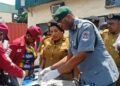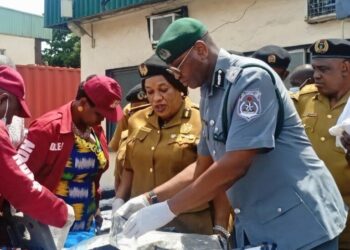



























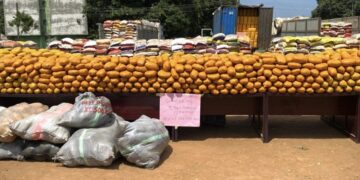













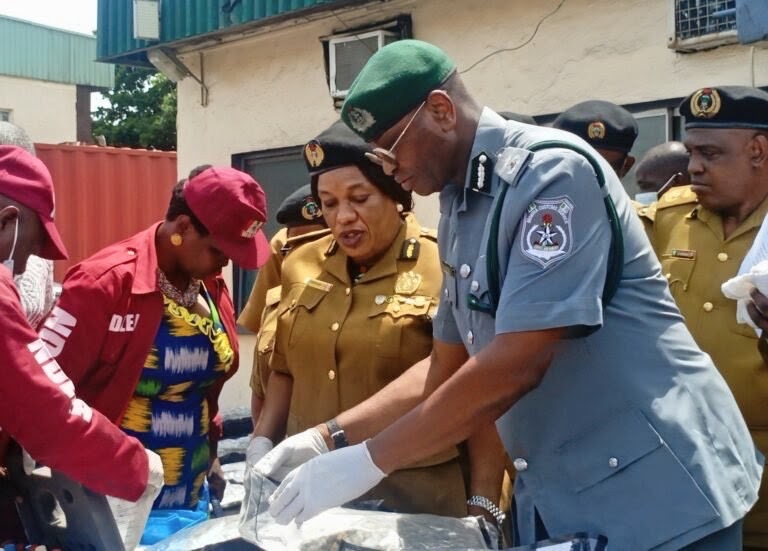
The Tin-Can Island Port Command of the Nigeria Customs Service ( NCS) in collaboration with the National Drug Law Enforcement Agency ( NDLEA) has intercepted 8,347 packages of Cannabis Indica weighing 4,173.5 kilograms with an estimated street value of N16.6 billion at the Tin-Can Island Port in Lagos.

The seizure came barely two weeks after operatives of both agencies intercepted a consignment containing 9,450 packages of cannabis weighing 4,729 kilogrammes valued at N18.96 billion.
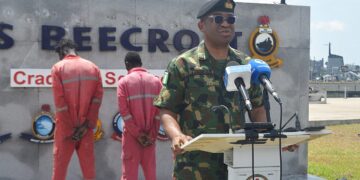
The Customs Area Controller of the Tin-Can Island Port Command, Comptroller Frank Onyeka, told newsmen while displaying the seized drugs at the port on Wednesday, that the successful interception followed credible intelligence jointly gathered by the Customs and NDLEA.
According to him, officers of the Enforcement Unit intercepted a 40-foot container marked HAMU 247034/8 and subjected it to thorough physical examination, which led to the discovery of the illicit drugs.
He disclosed that the container, which originated from Canada like the previous seizure, concealed the cannabis packages inside a used Ford bus and a Mercedes Benz C300 vehicle stashed within the container.
Onyeka said the latest seizure highlights the desperation of criminal networks seeking to use Nigerian ports as channels for trafficking dangerous substances into the country.
“Exactly two weeks ago, on April 30, 2026, we gathered here to brief the public on a major interception made through intelligence and collaboration between the Nigeria Customs Service and the NDLEA. Today, we are back again for yet another significant seizure.
“This tells us two things. First, criminal networks are still desperate to use our ports to push dangerous substances into the country. Second, and more importantly, it shows that our officers and sister security agencies are alert, focused and fully committed to stopping them,” he said.
Onyeka described the seizure as a deliberate attempt by criminal elements to undermine national security and endanger the lives of Nigerians, especially the youth.
“This is not just another seizure. This represents a deliberate attempt by criminal elements to jeopardize national security, endanger lives and profit from the destruction of our hardworking young men and women. Thankfully, due to the vigilance and professionalism of our officers and partner agencies, that consignment will not get to the streets,” Onyeka stated.
The Customs boss assured Nigerians that the command would intensify surveillance, strengthen intelligence gathering and sustain collaboration with NDLEA and other security agencies to ensure not just seizures but arrest and prosecution of those behind the shipments.
He also warned insiders collaborating with criminal syndicates that the command would not spare anyone found compromising national security for personal gain. Onyeka commended the Comptroller-General of Customs, Adewale Adeniyi and the Chairman/Chief Executive Officer of NDLEA, General Buba Marwa for fostering the partnership and intelligence-sharing framework between both agencies in the fight against illicit trade and drug trafficking.
Receiving the seized exhibits, the NDLEA Director of Seaport Operations, ACG Ibinabo ArchieAbia disclosed that the operation followed months of intelligence gathering, surveillance and tracking of the container shipment from Canada.
ArchieAbia explained that the container departed Toronto, Canada, on March 28, 2026, and was transported by rail to Montreal before being loaded onto the vessel Jakarta Express Voyage.
According to her, the vessel arrived at Tanger Med Port in Morocco on 15 April, where the container was discharged and later reloaded onto another vessel, Osaka Voyage, which eventually arrived at the Lagos port on 9 May 2026.
She said the seizure on May 12 was the result of over two months of monitoring by the NDLEA Marine Intelligence Unit and the Tin-can Island Strategic Command, working closely with international partners including the United Kingdom Home Office International Operations, the United States Drug Enforcement Administration, and the Royal Canadian Mounted Police.
ArchieAbia also noted that the operation demonstrated the effectiveness of inter-agency cooperation, international collaboration and intelligence-driven strategies in combating transnational organised crime and illicit drug trafficking.