




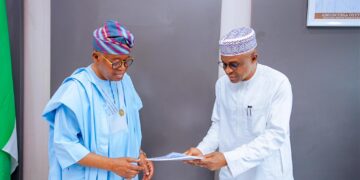
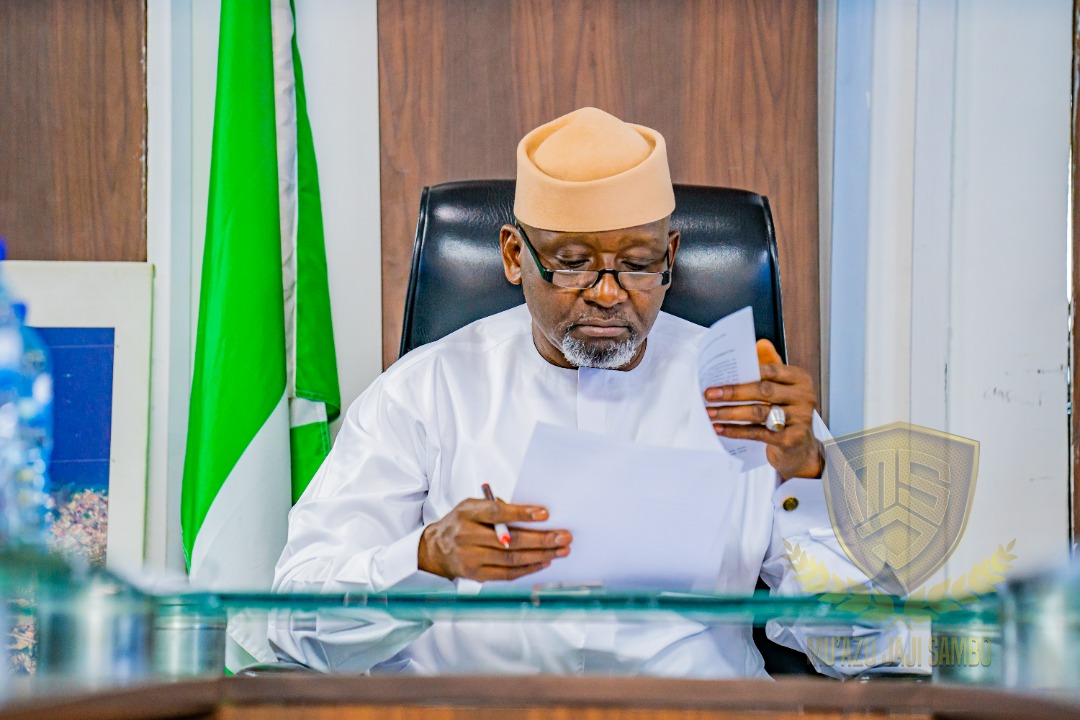


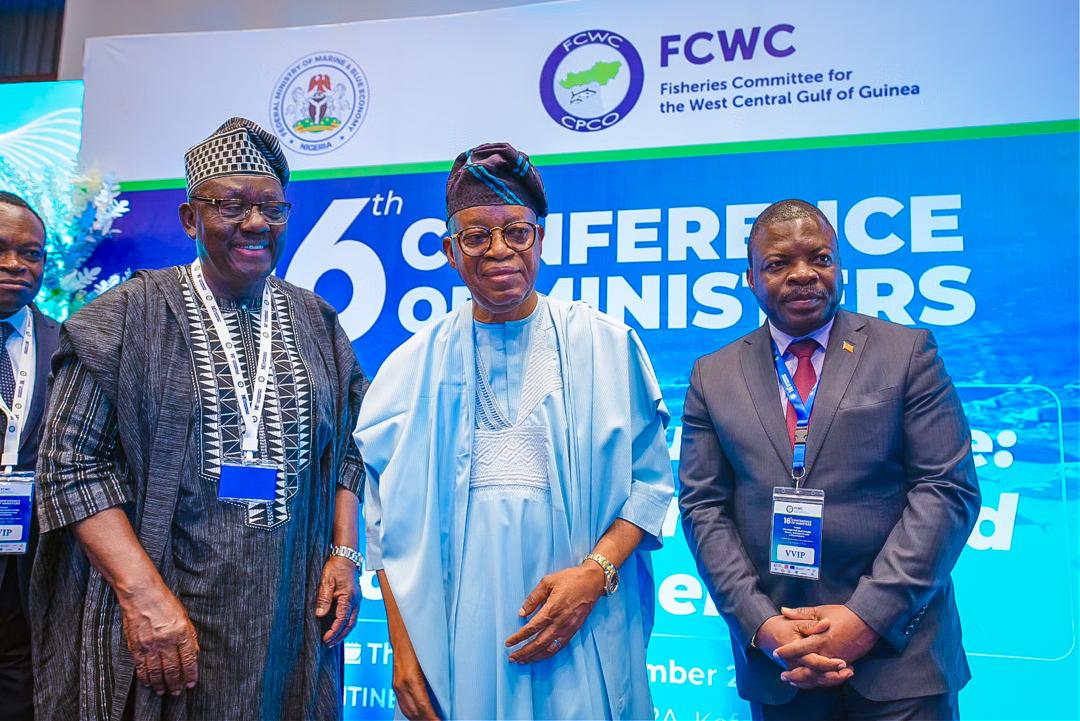
Nigeria’s Minister of Marine and Blue Economy, Adegboyega Oyetola, has been elected Chairman of the Conference of Ministers of the Fisheries Committee for the West Central Gulf of Guinea (FCWC).

His election took place on Thursday in Lagos during the annual FCWC ministerial conference hosted by Nigeria.
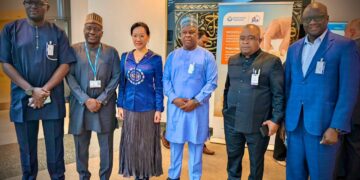
The high-level regional meeting, themed “Securing Our Ocean Future: People, Resources, and Commitments,” brought together ministers and senior officials from FCWC Member States — Benin, Côte d’Ivoire, Ghana, Liberia, Nigeria and Togo — as well as representatives of regional institutions, development partners and maritime experts.
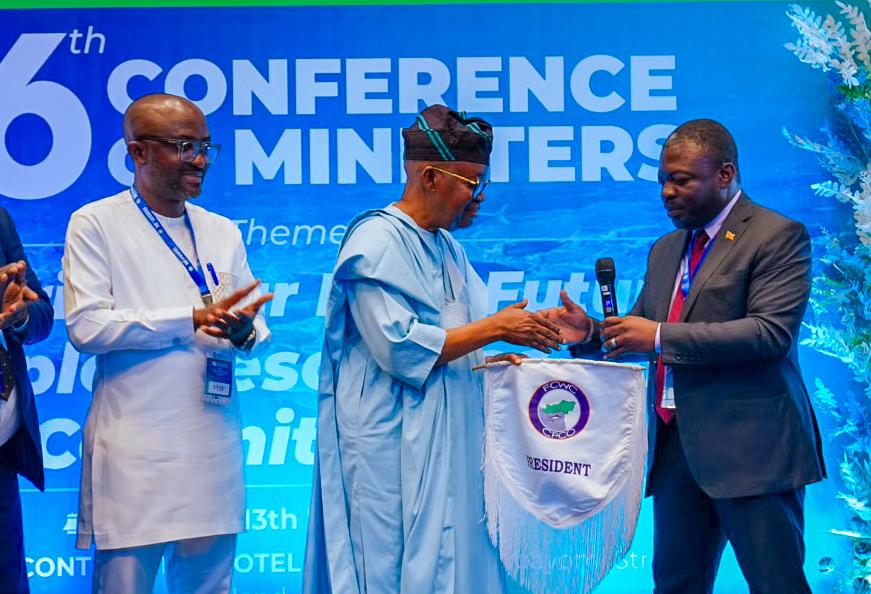
In his acceptance remarks, Oyetola thanked his colleagues for the confidence reposed in him and pledged to consolidate on the progress made by previous chairmen.
The minister restated his commitment to intensifying the regional fight against illegal, unreported and unregulated (IUU) fishing — a threat he described as “a scourge undermining marine sustainability and the livelihoods of millions.”
“This menace robs our nations of economic opportunities, threatens our food security, and undermines the livelihoods of millions who depend on the sea,” Oyetola said. “Under my chairmanship, I will work collaboratively with all Member States to ensure stronger enforcement, better data sharing, and improved governance of our shared marine resources.”
He said his tenure would focus on deepening regional cooperation, enhancing transparency, and building stronger institutional capacity to safeguard the shared maritime domain of the West Central Gulf of Guinea.
Earlier, while welcoming delegates on behalf of President Bola Ahmed Tinubu, Oyetola reaffirmed Nigeria’s strong commitment to the FCWC and underscored the rising importance of the blue economy in national development.
He noted that the sub-region’s marine wealth sustains livelihoods, food systems and trade, but is increasingly threatened by IUU fishing, maritime insecurity, pollution and the effects of climate change.
“These are challenges no nation can tackle alone,” he said. “They demand sustained regional collaboration, political will, and shared responsibility.”
Oyetola highlighted ongoing reforms under the Tinubu administration — including port modernisation, maritime security enhancement, aquaculture development and improved institutional coordination — all aimed at building a sustainable and competitive blue economy.
He further called for strengthened joint patrols, harmonised regulations, real-time intelligence sharing and coordinated enforcement among FCWC Member States to combat maritime crimes and protect ocean resources.
“Cooperation remains our greatest strength,” he told participants. “The outcomes of this conference must translate into actionable measures that strengthen ocean security, enhance economic opportunities and safeguard the prosperity of future generations.”
The ministerial meeting was preceded by technical sessions involving delegates from Member States and development partners, during which progress reports and new proposals for regional fisheries governance were reviewed.