




















The Nigerian Association of Master Mariners (NAMM) has expressed concerns over the welfare and protection of the Nigerian seafarers, despite their very important role in driving global trade.

To address the issue of poor working conditions that seafarers find themselves, a master mariner, Captain Rasheed Onakoya, PhD., called on the government as well as the industry regulatory agencies to ensure the inclusion of maritime professionals in policy-making positions, and strengthen the enforcement of labour standards.
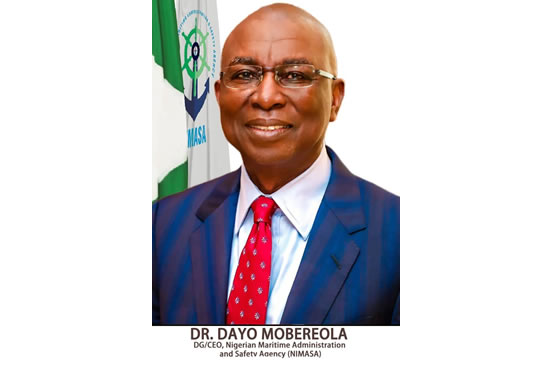
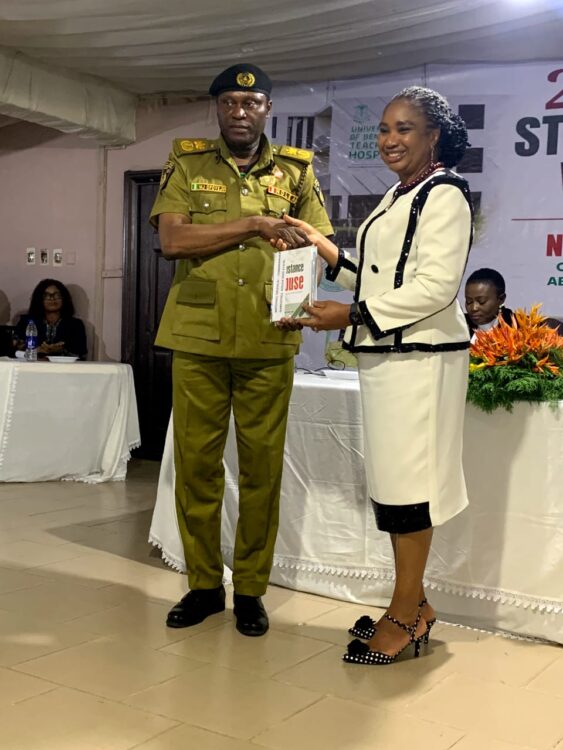
Dr Onakoya who made the call in his paper presented on occasion of the mariners’ Quarterly Meeting and Lecture Series, which held at the weekend, also draw attention to the need for greater collaboration between the Nigerian Maritime Administration and Safety Agency (NIMASA), shipping companies, and labour unions.
Commentary from the paper presentation highlighted facts that many seafarers still struggle in poor working conditions. It listed the problems of irregular payment of wages, inadequate healthcare, and arbitrary dismissals, situations that contradict international labour standards.
Onakoya noted that the persisting poor working conditions of seafarers discourages the younger seafarers, a situation he described as destabilizing to Nigeria’s maritime competitiveness in global shipping trade. Accordingly, Onakoya said these problems were attributable to policy inconsistencies, weak enforcement of labour laws, and corruption within the maritime sector.
Part of his presentation urged government’s intervention for sustained investment in maritime education, professional certification, and institutional reforms that align with international best practices.
The noted the need for immediate and sincere actions, saying: “We cannot continue to pay lip service to the welfare of those who drive our maritime economy. It is disheartening that Nigeria has yet to fully implement the provisions of the Maritime Labour Convention (MLC 2006) and related international frameworks that guarantee decent working and living conditions for seafarers. If we truly value the role of seafarers, their welfare must reflect it—beyond slogans and speeches.”
In his own presentation, Dr Amos Kuje called for stronger commitment to the welfare of seafarers and full implementation of the MLC 2006. He highlighted that the emotional and physical well-being of those working at sea directly impacts their performance, safety, and efficiency.
He said that despite seafarers’ vast experience and exposure to welfare centres around the world, there was still a critical need to reflect on why seafarers’ welfare matters, and how the MLC 2006 continues to shape global standards for their protection.
Kuje stated that neglecting seafarers’ welfare has far-reaching consequences, as studies show that poor working and living conditions can lead to a destructive cycle of vulnerability. Citing research by the late Reverend Kennan Peter of the Mission to Seafarers, he explained that vulnerability is “a state of emotional exposure that begins with the possibility of being hurt physically or emotionally.”
Dr Kuje said this condition often triggers psychological and physiological disturbances, weakens the body’s defences, and increases irritability and stress among seafarers. He emphasized that the human element remains central to maritime operations, and prioritizing seafarers’ welfare is a moral obligation essential for a safer and more sustainable maritime industry.
His words: “When seafarers operate in a hostile or unsupportive environment, it disturbs relationships on board, reduces efficiency, and often leads to addiction or other negative coping mechanisms.”
In his contribution, President of the NAMM, Captain Tajudeen Alao, draw attention to the need for improved quality of maritime education and training in Nigeria. He warned that the lack of globally recognized certifications among local seafarers is threatening the nation’s competitiveness in the international shipping industry.
He also noted that although Nigeria has a large pool of trained seafarers and marine technicians, many remain unemployable because they lack essential certifications such as the Certificate of Competency (CoC) and Global Integrated Logistics Training (GILT), which are internationally required for offshore operations.
Alao emphasized the importance of maintaining Nigeria’s position on the International Maritime Organisation (IMO) White List, which signifies compliance with global standards of maritime education and training. He disclosed that several Nigerian maritime institutions risk delisting due to inconsistent regulatory oversight and overlapping standards among the Ministry of Education, the National Board for Technical Education (NBTE), and other agencies.
The NAMM President urged collaboration between regulatory bodies, maritime academies, and the private sector to reform Nigeria’s maritime education system, align it with international competency frameworks, and ensure that graduates can compete favourably in the global.
“The law of demand and supply still applies in the maritime industry. We keep saying there is a surplus of manpower, but many of our people are not properly-trained. Without proper certification, no one will employ you on board ships abroad.
“Every maritime school must be on the IMO White List and audited accordingly. Unfortunately, in Nigeria, multiple agencies want to impose their own standards, and this creates confusion. Instead of focusing on competency-based training, we are teaching irrelevant subjects,” Captain Alao emphasized.