



























Former President Goodluck Jonathan has stated that Nigeria may have made costly strategic errors during a critical transition in global shipping, saying such missteps contributed to the collapse of its national carrier.

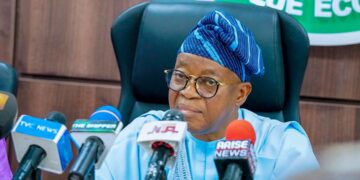
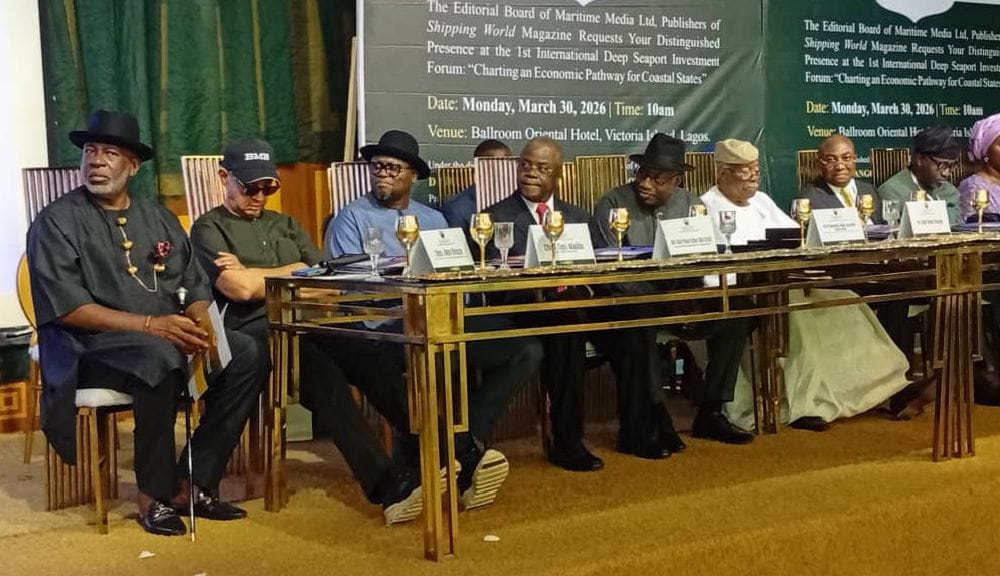
Jonathan made the remark on Monday while speaking at the 1st International Deep Seaport Forum organised by Maritime Media Limited in Lagos.
He disclosed that when the global shipping industry was transitioning to containerisation and deeper-draft vessels, Nigeria was investing heavily in outdated ships being phased out by other countries.
According to him, the failure to align with global trends weakened the viability of the Nigerian National Shipping Line (NNSL), ultimately leading to its decline.
“You know, we had the Nigerian National Shipping Line, and nobody has really investigated why these enterprises went down. When the world was migrating to container shipping, which required deeper vessels, the NNSL went to buy ships from countries that wanted to dispose of them.
“After acquiring these vessels, they could not operate effectively, and of course, the Nigerian Shipping Line collapsed. It may not be 100 per cent correct, but there is something there,” he said.
Jonathan described the situation as a mismatch between investment decisions and global industry realities, noting that although the account requires further verification, it points to deeper structural and policy failures.
He said the lessons from the NNSL’s collapse remain highly relevant as Nigeria seeks to reposition its maritime sector amid evolving global shipping standards.
The former president stressed the need for critical evaluation of past decisions to ensure that future investments in maritime infrastructure align with international best practices.
Without such reflection, he warned, Nigeria risks falling behind again in global shipping, with implications for trade competitiveness and economic growth.
A former chairman of the Nigerian Ports Authority (NPA), Bode George, warned against the concentration of port infrastructure in Lagos.
“It cannot be right to concentrate all your infrastructure and resources in one place. What is happening in the Strait of Hormuz now is a wake-up call. Who knows what could happen tomorrow?” he said.
The minister of Marine and Blue Economy, Adegboyega Oyetola, who was represented by the NPA’s general manager of Corporate and Strategic Planning, Seyi Iyawe, said the federal government was committed to a green port development agenda.
According to him, the strategy is anchored on modernisation, automation, and environmental sustainability.
“We are embracing green port philosophy and moving away from conventional ports. Deep seaports are important, but we must also prioritise hinterland connectivity to ensure efficient cargo movement.
“One of our major challenges has been digital automation and transportation. Now that the Nigerian Single Window has been launched, we must develop automated and environmentally friendly ports,” he said.
On his part, a former Managing Director of the NDCC, Timi Alaibe, emphasized the Gulf of Guinea as a strategic zone requiring sustained investment. “We must move from rhetoric to action, and this requires collaboration between the Federal Government and private partners,” he said.
A former managing director of the NPA, Bello Gwandu, cautioned against an overemphasis on deep seaports, arguing that Nigeria’s priority should be well-connected international ports capable of attracting sufficient cargo traffic.
Earlier, the convener of the forum and chief executive officer of Maritime Media Limited, Elder Asu Beks, had commended President Bola Tinubu for establishing the Ministry of Marine and Blue Economy to harness the country’s maritime potential.
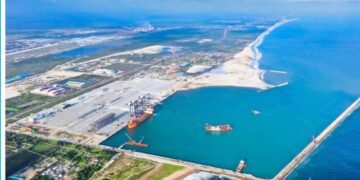
Beks noted that Nigeria’s 853-kilometre coastline positions it as a key maritime player but lamented that evolving global shipping trends, particularly the shift to larger vessels, had rendered many of the country’s ports less competitive.
He added that inefficiencies, including cumbersome and costly cargo clearance processes, had further reduced the attractiveness of Nigerian ports on the global stage.