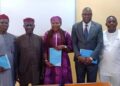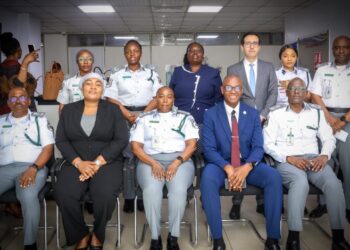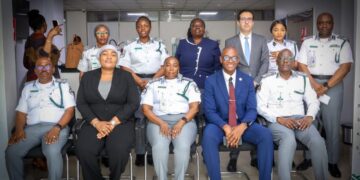



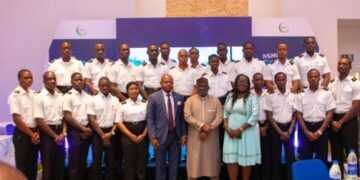

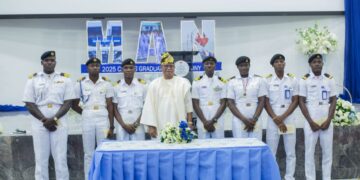
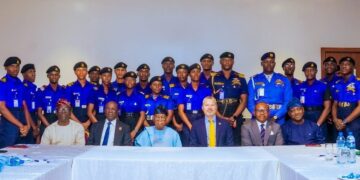






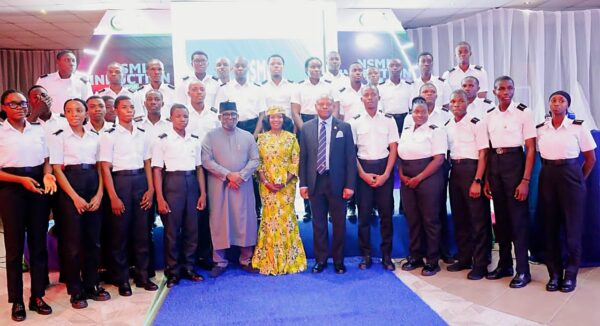
Thirty cadets from the Maritime Academy of Nigeria (MAN), Oron, Akwa Ibom, have been inducted for a mandatory one-year sea-time training with the NLNG Shipping and Marine Services Limited (NSML), as part of efforts to make Nigeria part of a globally competitive maritime workforce.

The induction places the cadets aboard NSML-operated vessels under international standards, strengthening the talent pipeline required to sustain shipping, offshore energy logistics and Nigeria’s wider maritime value chain.
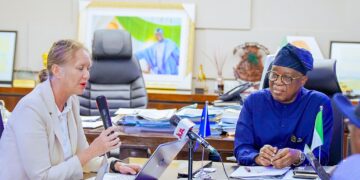
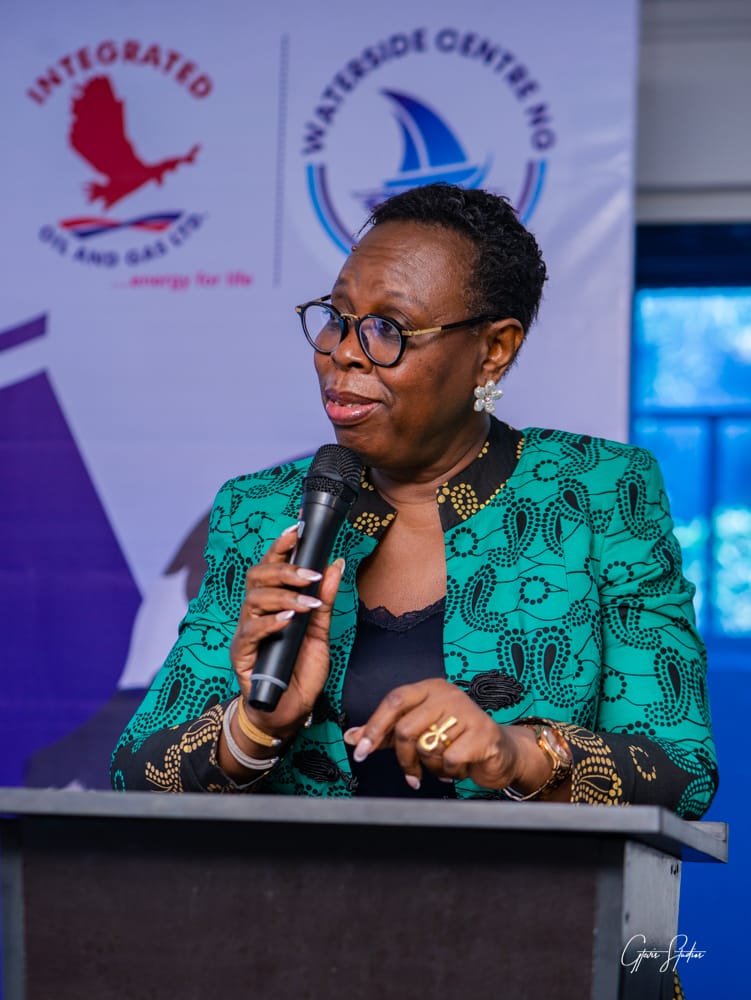
Speaking on behalf of the Minister of Marine and Blue Economy, Adegboyega Oyetola, the Director of Information and Public Relations, Anastasia Ogbonna, described the development as a strategic investment in human capital that directly links policy to industry outcomes.
“This initiative ensures that Nigerian cadets are equipped with the practical expertise required to become globally competitive seafarers. By facilitating training aboard prestigious NLNG vessels, we are deepening indigenous capacity in line with international best practices.”
According to the minister, the placement reflects the administration’s commitment to youth development and its broader objective of positioning Nigeria as a credible hub for maritime excellence under the Blue Economy framework.
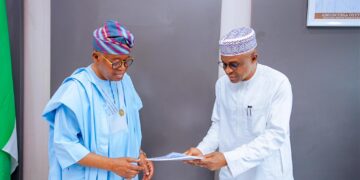
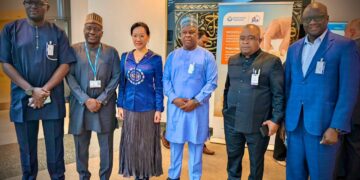
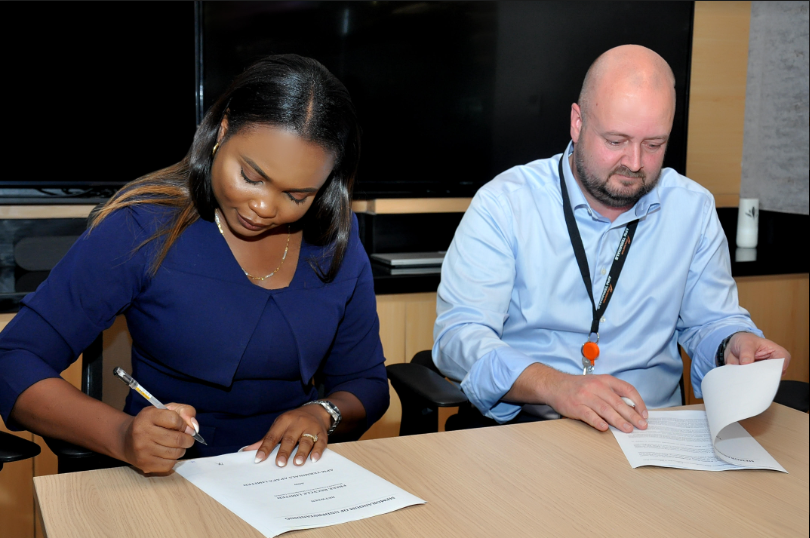
The ceremony, held at NSML’s Maritime Centre of Excellence (MCOE), also highlighted the revival of a long-standing training partnership between Maritime Academy of Nigeria and NLNG Shipping and Marine Services Limited, formalised through a Memorandum of Agreement executed in December 2025.
In his remarks, the Acting Rector and Chief Executive Officer of the Academy,Dr Kevin Okonna, said the induction represented both an institutional milestone and a signal to the global shipping industry that Nigeria is serious about supplying quality seafarers.
He said: “Today is one of my happiest days as the Acting Rector and CEO of the Maritime Academy of Nigeria, Oron. This is the day that the Academy and the NLNG Shipping and Marine Services Limited (NSML) have, through the execution of the MOA signed on 19th December, 2025, re-established the special relationship that has existed between both organisations over the years and led to the supply of excellent seafaring officers and ratings for global shipping.”
Okonna noted that the latest intake of 30 cadets follows the earlier induction of 13 Maritime Academy of Nigeria cadets in December 2025, bringing renewed confidence to students and reinforcing Nigeria’s compliance with the International Convention on Standards of Training, Certification and Watchkeeping for Seafarers (STCW).
“Through the MAN, Oron-NSML partnership Nigeria is assuring the global maritime industry that the country has the capacity and is committed to making its contributions to the supply of quality seafarers to the industry,” he said.
He further linked the programme directly to the federal government’s policy direction, crediting President Bola Tinubu’s Renewed Hope Agenda and the minister’s leadership in securing Federal Executive Council approval for the National Policy on Marine and Blue Economy in 2025.
“This induction ceremony is the outcome of the Honourable Minister’s Marine and Blue Economy Policy direction, which promotes partnership with industry stakeholders for onboard training of Nigerian seafaring cadets and supply of globally competitive seafarers.”
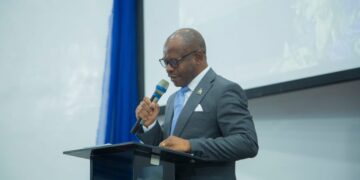
From the industry side, NSML’s Managing Director, Abdulkadir Ahmed, described the programme as a deliberate, long-term investment in people, which he identified as the most critical asset in maritime operations.
“In December 2025, NSML signed a strategic agreement (MOU) with the Maritime Academy of Nigeria, Oron, to provide structured training for cadets through our Maritime Centre of Excellence. That decision was not accidental; it was a deliberate investment in people — the most critical element in maritime operations, and today we are witnessing the first fruits of that commitment,” he said.
Ahmed said the induction underscores NSML’s broader strategy to build a sustainable maritime workforce through world-class training infrastructure, including simulator-based learning and professional development aligned with international best practices.
“This is not just an activity; it is part of the DNA of NSML. Every investment we make in training reinforces our commitment to excellence, operational safety, and national development,” he stated.
Credit: The Nation