








































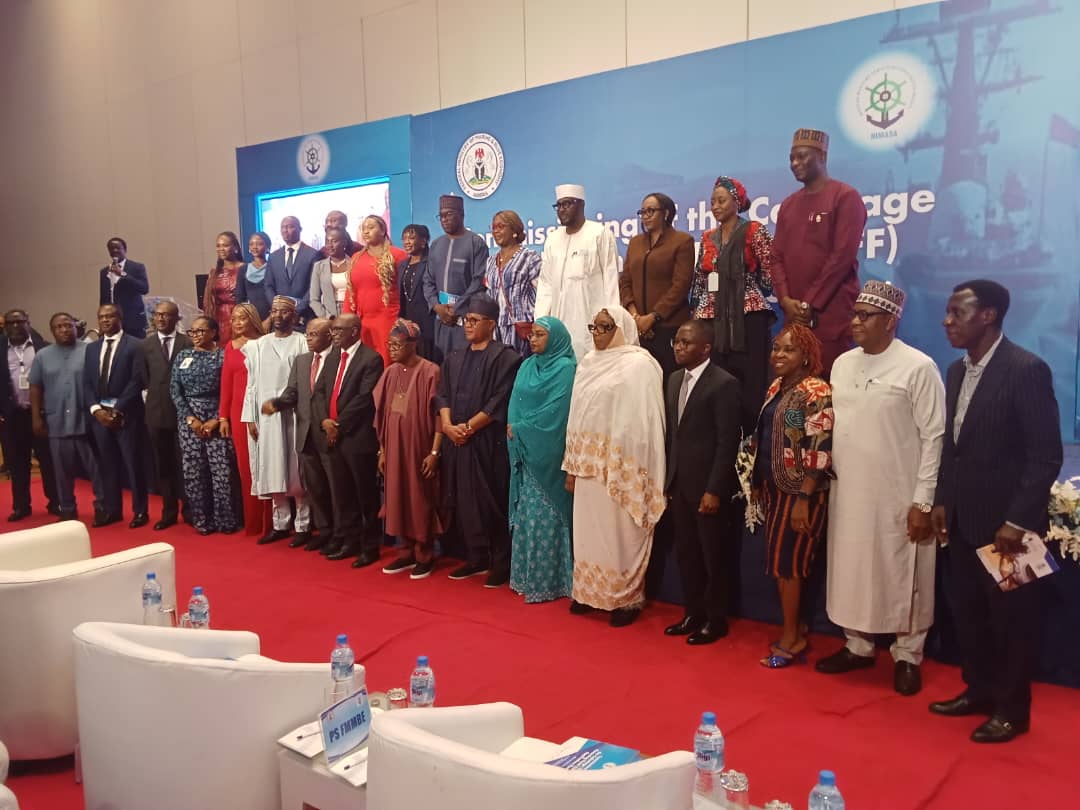
The Federal Government has formally launched the Cabotage Vessel Financing Fund (CVFF) Application Portal, a major policy intervention aimed at strengthening indigenous ship ownership, deepening Nigeria’s participation in maritime trade, and advancing the country’s blue economy agenda.

Speaking at the launch, the Minister of Marine and Blue Economy described the event as a strategic milestone in Nigeria’s ongoing efforts to diversify its economy, build resilience, and achieve sustainable growth. He said the initiative reflects the Federal Government’s deliberate move to reposition the maritime sector as a central pillar of national development.
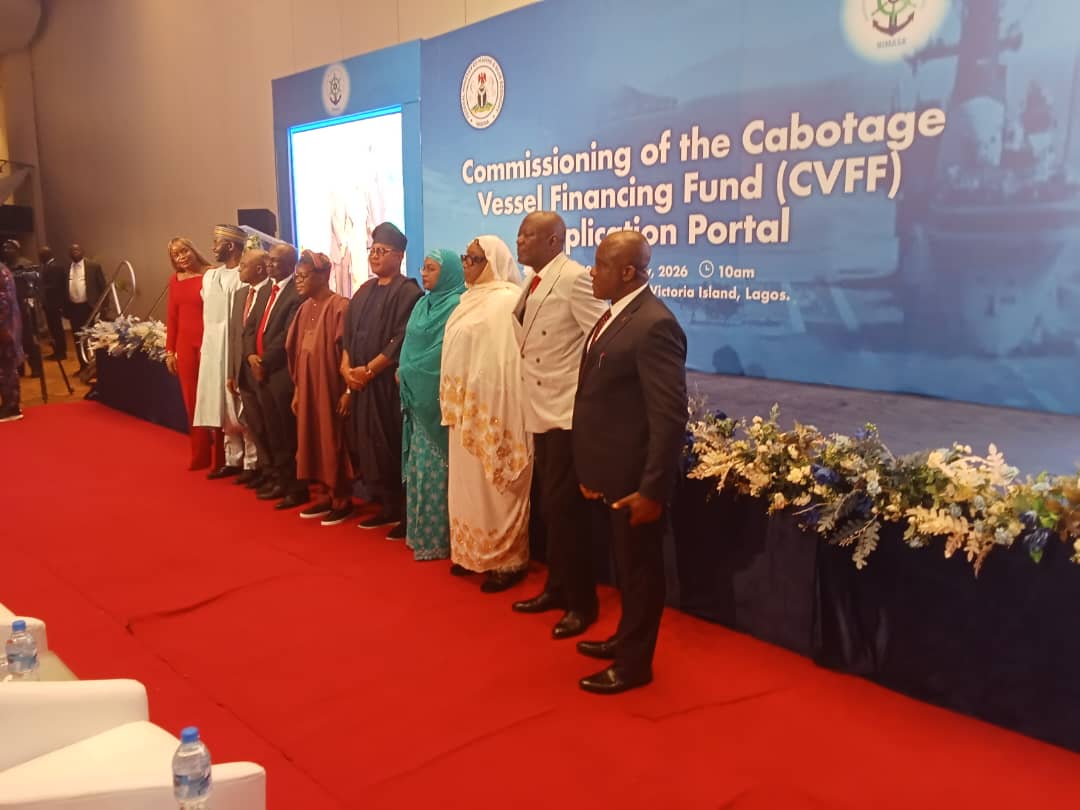
The minister recalled that President Bola Ahmed Tinubu established the Federal Ministry of Marine and Blue Economy in August 2023 as part of a forward-looking policy to unlock the vast economic potential of Nigeria’s maritime domain, coastal resources and inland waterways. According to him, the launch of the CVFF Application Portal must be seen within this broader policy framework, which prioritises indigenous capacity development, transparency, efficiency and long-term sustainability.
He noted that the maritime sector remains the backbone of global commerce, with most international trade conducted by sea. However, despite Nigeria’s strategic geographic location, extensive coastline and vibrant entrepreneurial base, indigenous participation in coastal and inland shipping has remained limited. This, he said, has largely been due to the absence of a functional, credible and transparent financing framework to support Nigerian shipowners.
The CVFF, established under the Coastal and Inland Shipping (Cabotage) Act of 2003, was designed to address this gap by providing financial support to indigenous operators. The minister explained that institutional, regulatory and structural considerations over the years necessitated a cautious and deliberate approach to the fund’s operationalisation, in order to ensure sound governance and sustainability.
According to him, the CVFF is structured as a strategic development instrument aimed at facilitating access to competitive vessel financing for indigenous operators. He said the fund is expected to reduce Nigeria’s reliance on foreign-flagged vessels for coastal trade, improve value retention within the domestic economy, create employment opportunities for Nigerian seafarers and stimulate growth in related sectors such as shipbuilding, ship repair and maritime services.
Beyond its economic impact, the minister said the CVFF would also strengthen Nigeria’s maritime safety and security framework. A stronger indigenous fleet, he explained, would enhance operational visibility within Nigerian waters and support national efforts to maintain a secure, regulated and efficient maritime domain, in line with the country’s improving maritime security profile and growing international standing.
He emphasised that the CVFF is a revolving fund designed to grow through prudent utilisation and timely repayment, stressing that beneficiaries must meet their obligations to ensure the intervention remains available to future generations of Nigerian maritime entrepreneurs.
The minister disclosed that the Ministry of Marine and Blue Economy, working closely with its agency, the Nigerian Maritime Administration and Safety Agency (NIMASA), as well as the Federal Ministry of Finance, the Central Bank of Nigeria and other key stakeholders, had resolved outstanding issues surrounding the fund and developed a framework that meets both national expectations and international best practices.
He said the launch of the CVFF Application Portal marks the formal commencement of the disbursement process. The portal, he explained, serves as an institutional gateway designed to introduce transparency, accountability and order into the administration of the fund. Through the platform, eligible Nigerian shipowners can submit applications that will be assessed against clearly defined criteria, supported by robust due diligence and professional financial oversight by approved Primary Lending Institutions.
The minister added that the fully digital CVFF Application Portal aligns with the Federal Government’s e-Government agenda and the reform objectives of the Presidential Enabling Business Environment Council (PEBEC). He said the administration remains committed to reducing bureaucratic bottlenecks, eliminating discretion, improving turnaround time and enhancing the ease of doing business across critical sectors of the economy.
He further noted that the digital and rules-based framework would insulate the CVFF from arbitrariness and opacity, while reinforcing confidence among investors, financial institutions and indigenous maritime operators.
Calling on shipowners and other industry stakeholders to take advantage of the initiative, the minister said the operationalisation of the CVFF represents a practical demonstration of President Tinubu’s Renewed Hope Agenda. He expressed confidence that the fund would strengthen Nigeria’s shipping industry, empower local enterprise and contribute meaningfully to national economic growth.