





















Stakeholders in Nigeria’s maritime sector have cautioned that unresolved structural weaknesses, absence of a legal framework and persistent inter-agency conflicts could undermine the effectiveness of the National Single Window (NSW), potentially resulting in financial losses for importers and the wider economy.

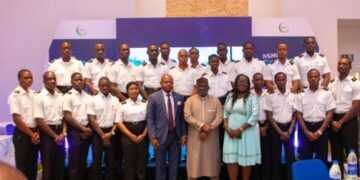
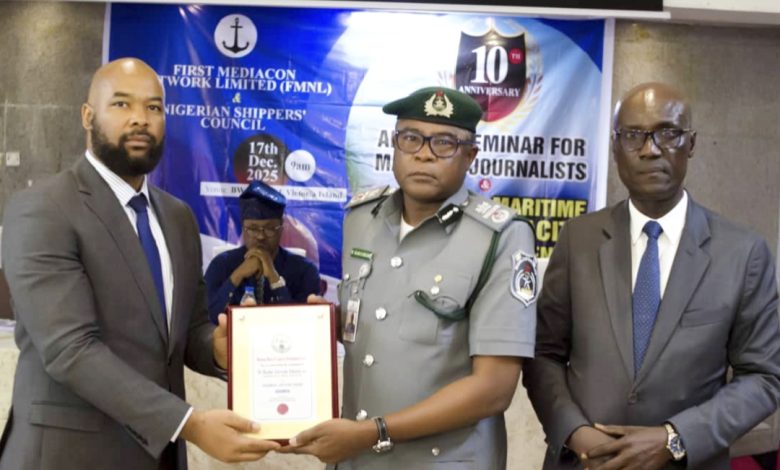
Attention to this concern was raised on Wednesday in Lagos, at the 10th Annual Seminar for Maritime Journalists and the launch of the Centre for Maritime Media and Capacity Development, organised by First Mediacon Network Limited (FMNL) in collaboration with the Nigerian Shippers’ Council (NSC).
At the event themed “A Decade of Collaboration for Impact: Strengthening Maritime Journalism for the Future,” participants expressed concern that the NSW, scheduled to commence operations in the first quarter of 2026 to streamline port processes, could face serious implementation challenges if the current multiplicity of regulatory interfaces at the ports is not addressed.
The National Vice President of the Association of Nigerian Licensed Customs Agents (ANLCA), Mr. Segun Oduntan, said that despite the NSW concept, operators still contend with numerous regulatory agency platforms, alongside multiple internal systems covering enforcement, scanning, gate operations and cargo clearance.
Represented by his Senior Special Adviser on Media, Suleiman Ayokunle, Oduntan recalled previous digital rollouts that led to a complete shutdown of cargo evacuation for nearly three weeks.
While acknowledging that such teething problems are common with technology-driven reforms, he warned that without proper coordination, the economic consequences could be severe. He cited recurring disputes between the Nigerian Shippers’ Council and the Maritime Police as examples of costly overlaps that the NSW must resolve to deliver real efficiency.
Meanwhile, a former ANLCA Acting Vice President, Mr. Kayode Farinto, also warned that past digital transitions had imposed heavy costs on operators, including connectivity failures that delayed declarations and invalidated submitted documents.
While pointing out the absence of a legal framework for the NSW, he observed that Port Police and other agencies at ports still have a leeway to intercept and seized cargoes already released from ports.
He equally criticised examination fees charged by regulatory agencies, particularly the Standards Organisation of Nigeria (SON), even where conformity certificates had already been issued, describing the practice as trade-inhibiting.
Earlier, the Chairman of the occasion and Senior Partner, Akabogu and Associates, Dr. Emeka Akabogu, SAN, noted that Customs sits at the heart of the National Single Window framework but observed that over the years, Customs, importers and exporters have not operated in sync at the nation’s ports.
Akabogu, however, stressed that without alignment and shared responsibility among these key actors, the NSW may struggle to achieve its objectives.
The Comptroller-General of the Nigeria Customs Service (NCS), Bashir Adewale Adeniyi, MFR, represented by the Zonal Coordinator, Zone A Headquarters, ACG Mohammed Babandede, commended the organisers on the launch of the Maritime Media and Capacity Development Centre.
He reaffirmed that Customs is fully integrated into the National Single Window project and will commence implementation in line with President Bola Ahmed Tinubu’s directive for first-quarter 2026.
In the keynote address, the Executive Secretary/CEO of the Nigerian Shippers’ Council, Dr. Pius Akutah MON, represented by Mr. Moses Abere, said the media remains a critical partner in promoting transparency, accountability and competitiveness in the maritime sector, as the industry navigates increasing digitalisation and regulatory reforms.
The NSW is designed to allow traders to submit all regulatory information through a single electronic platform for imports, exports and transit, with the goal of reducing delays, cutting costs and improving trade facilitation.
Part of the programme featured a training on “Data Journalism in Maritime Trade: Using Analytics to tell Bigger Stories,” by the Customs National Public Relations Officer, Dr. Abdullahi Maiwada, who encouraged journalists to embrace infographics and interpretation of data beyond just reporting the data.
Maiwada noted the need for journalists to strike a balance between speed and accuracy in their reports, even as he outlined the Customs robust commitment to NSW implementation.
In his welcome address, the Chief Executive Officer, FMNL, Sesan Onileimo, said maritime journalists are confronted with the need to upscale their knowledge, especially in this era of artificial intelligence, digitalisation and social media in general.
He said all of these have combined to put journalists under intense pressure to push out factual details at all times, and also compete and be relevant, which is why the centre was established.
Onileimo said that the centre is a bold move to bridge this gap and ensure that maritime journalists, irrespective of how young or old they are on the beat, will remain relevant.