



















By Lanre Badmus

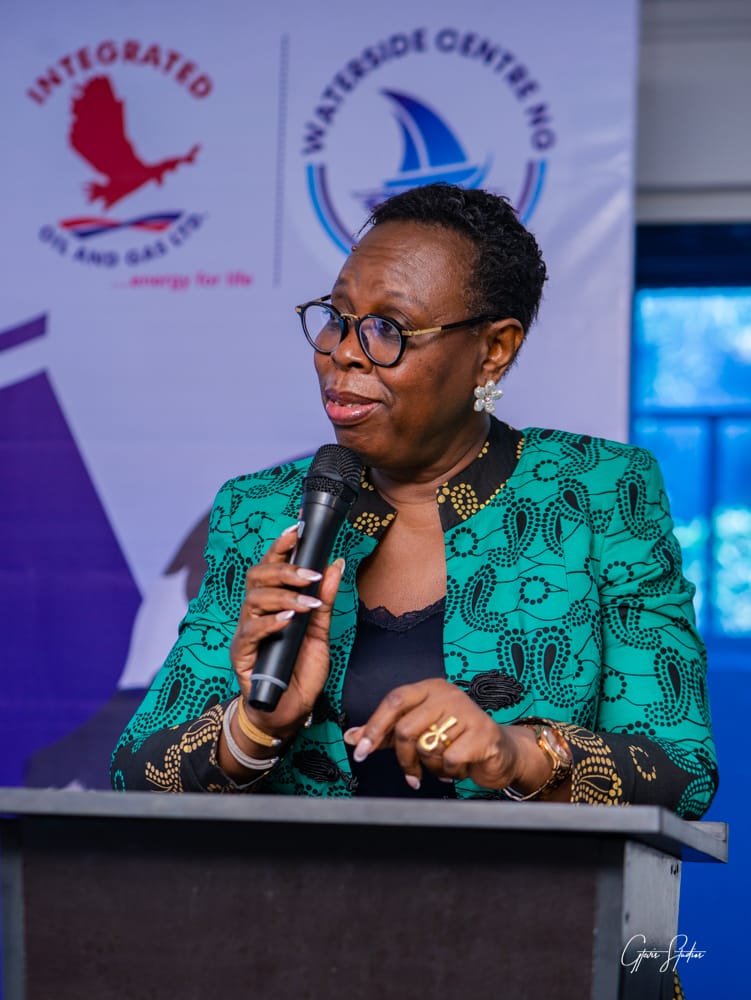
Abridged version of the paper presented at the SMART RIVERS 2025 Conference, September 10, Memphis-Tennessee, hosted by the U.S. Section of the World Association for Waterborne Transport Infrastructure (PIANC).
Globally, inland waterway systems have facilitated significant economic and environmental advantages. In Europe, the Rhine–Main–Danube network supports the movement of millions of tonnes of cargo annually, offering a low-cost, energy-efficient alternative to road haulage (European Commission, 2019). In United States, the Mississippi River system is vital for navigation, agriculture, ecology, and cultural heritage. It is a major transportation route and provides water for irrigation and other uses. Similarly, the Yangtze River Economic Belt that integrates ports, logistics hubs, and manufacturing clusters – contributes over 40% of China’s GDP. These river systems highlight the transformative potential of coordinated waterway development.
Africa is bordered on the west by the Atlantic Ocean, north by the Mediterranean Sea, north-west by the Red Sea and east by the Indian Ocean. Historically, water bodies such as the Niger, Congo, Nile, Zambezi, and Lake Victoria have served as natural corridors for trade, cultural exchange, and economic development. However, they are underutilized in the continent’s transport and logistics system. Inland water transport (IWT) remains marginal compared to road and rail transport in most African countries, accounting for less than 2% of total freight movement across the continent.
The concept of a Trans-Africa Inland Waterway Network envisions the systematic integration of major navigable rivers, lakes, and canals into a continuous, cross-border transport corridor spanning multiple regions of the continent. Such a network would facilitate intra-African trade, and reduce dependency on congested road corridors. This vision aligns with the African Union’s Agenda 2063, the Africa’s Integrated Maritime (AIM) Strategy 2025 and the African Continental Free Trade Area (AfCFTA) objectives, which emphasize efficient, cost-effective, and sustainable transport infrastructure as a catalyst for economic integration.
A Trans-Africa inland waterway network would; lower business costs by leveraging the natural carrying capacity of rivers, thereby reducing energy and freight rates for bulk commodities and manufactured goods; improve trade connectivity for landlocked nations such as Chad, Niger, Mali, South Sudan, and the Central African Republic; enhance sustainability by providing a low-carbon alternative to road transport, reducing greenhouse gas emissions and road congestion; promote regional integration through harmonized navigation policies, port development, and cross-border infrastructure planning.
However, realizing this potential requires overcoming technical, institutional, and environmental challenges. Issues such as seasonal navigability, siltation, dredging costs, inadequate port facilities, and fragmented regulatory regimes must be addressed. Furthermore, financing the network will demand innovative funding models, including public–private partnerships, infrastructure bonds, development financing and carbon credits. Given Africa’s rapid population growth, urbanization, and the projected rise in intra-African trade under AfCFTA, the development of a Trans-Africa inland waterway network should no longer be a distant vision, it is a strategic imperative.
BACKGROUND
Over the centuries, littoral settlements in Africa had developed sufficient navigation experience to enable them trade within the continent as well as rest of the old world. Sailors from the Aksumite Empire in the Red Sea region were involved in the transshipment of trade goods from India and Sri Lanka to Roman ports in Egypt and Jordan. Coastal communities in the islands of East Africa, extending from Somalia to Mozambique built ships that plied the great water routes of the Indian Ocean from the Arabian coast to Malaysia By the sixteenth century, Niger-Senegal-Gambia river network influenced a considerable portion of West Africa trade from Senegal through the Hausa-lands in Northern Nigeria and down to Benin Empire, which ultimately connected to the Atlantic Ocean according to the historian, John Thornton (Samuel, 2025).
As early as the 17th century, European merchants were using large river barges for trade and travel along the Niger River from Guinea to Nigeria’s delta region. These barges and other large river-crafts could carry more cargo than porters and most caravans, significantly reducing the cost of transportation and increasing the volume of regional trade. The Songhai river barge could carry up to 30 tonnes of grain, and by the 1800s these river barges had a capacity of 60-80 tons, measured about 100ft long and 14ft wide, had a crew of 18 including the captain, and could accommodate more than 50 other passengers alongside their animals and cargo. An unnamed European merchant in 1832 made the comment that in the lower Niger River “there appeared to be twice the traffic going forward here as in the upper parts of the Rhine.”
River transportation was extensively used for commerce in the Central African region as well, especially the lower Congo and the Kwanza region. So also the main Congo River tributaries: where trade flourished among the settlements connected to the Atlantic Ocean (Badmus, 2024). Along the continent’s Atlantic shore were significant maritime activities that enable commerce and migration from West to Central Africa. Similar dynamics of navigation was at play in the Great Lakes region of East Africa. The African Great Lakes comprise seven lakes that connect 11 countries in East Africa. The Lakes constitute about 25% of the world’s unfrozen fresh water and 10% of the world’s fish species; they are important source of food and fresh water for the region (Lewis, 2019). The Lakes Victoria, Tanganyika, and Malawi connect the various kingdoms and communities of the East African mainland, settlers were using a variety of watercrafts ranging from sea-going dhows to large canoes that could carry goods and up to 80 passengers.
RECENT DEVELOPMENTS
Lake Chad Transaqua Project
The Transaqua project, first pitched in the 1970s by the Italian engineering firm, Bonifica, involve the diversion of an estimated 5% of the Congo River annual flow to revive Lake Chad (Sayan et al, 2020). The idea is to construct a 2,400-km canal to divert water from the Congo River basin and replenish Lake Chad. The benefits extend beyond connecting at least ten African countries, to irrigation and hydro-power dams. Discussion re-emerged in the mid-2010s, when the Chinese government through PowerChina signed a Memorandum of Understanding (MOU) with the Lake Chad Basin Commission (LCBC) in 2016. PowerChina and Bonifica in 2017 agreed to collaborate on the water infrastructure proposal. Although alternative proposals had emerged, LCBC at an international conference hosted by Nigeria (in 2018) announced its endorsement of the Transaqua project with a price tag of US$50billion. Its implementation has been frustrated due to conflicting interests by countries who are to be parties to project and private interests outside the continent.
Nile – Victoria Shipping Corridor
The Nile – Lake Victoria Shipping Corridor championed by the Government of Egypt is a 4,000km waterway connecting 10 African countries: Tanzania, Kenya, Uganda, Rwanda, Burundi, Democratic Republic of Congo, South Sudan, Sudan, Ethiopia and Egypt (Koigi, 2017). The project will enable navigation along Nile from Lake Victoria to the Mediterranean Sea. Besides deepening regional integration, the project will provide a shorter and direct transport route between Western Europe and Eastern – Central Africa, that is relatively cheaper and environment friendly. It will be implemented in phases, premised on an intermodal concept integrating river, rail and road transport facilities along the Lake Victoria-Nile Corridor. The New Partnership for Africa’s Development (NEPAD) Heads of State and Government Orientation Committee (HSGOC) and the African Union Assembly approved a grant of US$2million for a comprehensive feasibility study. The study has a planned completion date of 30 December 2026. The corridor will serve the proposed regional shipping Line, an alternative corridor for the movement of goods and persons between East Africa and the Mediterranean Sea.
“Sula Ya Amani” Project
The Navigable Frontier Canal of the Africa Rift also known as the “Sula Ya Amani” (the Face of Peace) project is a water infrastructure aimed at connecting the Nile, Congo and Zambezi river basins, as well the Great Lakes of East Africa (Tanganyika, Kivu, Edward, Albert and Victoria) The project is being promoted by a Congo based NGO, CSP-Regla, to serve multiple purposes – navigation, hydropower generation and peace building. The project intends to utilize canalization techniques like Waterslope, Blue Wave, and pulsating canalization, to address significant engineering challenges. The “Sula Ya Amani” is not yet a funded or operational project.
East Africa Great Lakes Corridor
The Southern Corridor project entails construction of 900km rail-line connecting Lakes Tanganyika, Kivu, and Edward, upgrading existing lake ports and providing transshipment equipment to facilitate smooth transfer of cargo. In addition, the Lakes are to be connected to the Atlantic Ocean by rail link with the Lobito Corridor, as well as inter-linkages with the Southern and East Africa railway systems. The project is being promoted by the Governments of Burundi, Democratic Republic of Congo (DRC), Rwanda and Uganda and Zambia. There is a consideration for a link with the Red Sea through the Sudan railway system.
Niger River Corridor
The Niger River is the main waterway in West Africa and flows through five countries – Guinea, Mali, Niger, Benin and Nigeria. More than half of its over 4,000km stretch is navigable. In 2021, the African Export-Import Bank (Afreximbank) commissioned the Nigerian Navy to produce new navigational charts of the lower River Niger. The charting was concluded in 2023, from North Central Nigeria to Burutu in the Niger Delta, a distance of 456km. The exercise is to enable the safe operational launch of a regional transport company called the Sealink project. Sealink is a public private partnership special purpose vehicle (SPV) being facilitated by Nigeria Export Import Bank (NEXIM) to provide water transport services from the Atlantic Ocean to Nigeria’s hinterlands and river communities. Additional works such as dredging and removal of wrecks are yet to be undertaken.
CHALLENGES
The vision of a continent-wide inland waterway network is bold and transformative. However, the construction and operation of such a system would face multiple interrelated challenges spanning geography, engineering, environment, politics, and finance.
Geography
Africa’s river systems — the Nile, Congo, Niger, Zambezi, the Great Lakes and others — are vast but geographically fragmented. Unlike Europe’s Rhine–Danube corridor, which is naturally interconnected, Africa has no natural hydrological link between its major basins. The watersheds are separated by terrain barriers such as the East African Rift Valley, the Congo–Nile Divide, and highland plateaus in Central and Southern Africa. Overcoming these barriers would require either inter-basin transfer schemes or construction of complex artificial canals.
Engineering
The operation of a Trans-Africa Inland Waterway Network would demand massive engineering interventions. Engineering works would include dredging of shallow or silted river stretches, construction of locks and dams to manage elevation differences, and establishment of river ports and inland terminals. Many African rivers experience extreme seasonal fluctuations in water levels, further complicating navigation reliability. The technical expertise required for sustained maintenance and operation pose substantial hurdles.
Environment
Inland waterways are not only transport corridors but also important bio-systems. Large-scale modifications to rivers and wetlands could disrupt biodiversity, natural water flows, and ecological services. For instance, dredging and damming may threaten fisheries and wetlands that millions of people depend on for livelihoods, such as the Sudd in South Sudan or the Inner Niger Delta of central Mali, south of the Sahara Desert. There is also the risk of altering sediment flows and increasing vulnerability to flooding or droughts. Balancing transport development with environmental sustainability would be a delicate challenge.
Politics
A project of such magnitude, spanning over twenty-two sovereign states, requires serious political cooperation. Each country has distinct priorities, water-use policies, and security concerns. The potential for hydro-political tensions is high, especially in basins already contested — such as the Nile, where upstream and downstream countries differ on water allocations. Harmonizing navigation rules, customs procedures, and infrastructure standards across regions (ECOWAS, EAC, SADC, ECCAS) would require strong supranational institutions and trust-building mechanisms.
Finance
The financial demands of trans-Africa marine highway are daunting. Building canals, locks, modern ports, and dredging systems would involve extremely high capital expenditure, potentially running into several billions of US dollars. The return on investment (ROI) for inland waterways is typically long-term, as benefits accrue gradually. This makes it difficult to attract private investors without substantial public subsidies, concessional financing, or innovative models such as regional infrastructure bonds. Competing development priorities in many African countries may limit available fiscal space.
PROSPECTS
The operation of a Trans-Africa inland waterway network offers significant economic and social benefits across the continent, it provides a more sustainable and cost-effective alternative to open up Africa’s mineral rich hinterlands and fast track the growth of intra-Africa trade. The length of the network is over 20,000 km.
Trans Africa Marine Highway
| River Corridor | Estimated Distance | Remarks |
| Senegal – Niger | 250–300 km | Canals + Locks |
| Niger – Congo | 500–700 km | Canal (technically demanding) |
| Congo – Great Lakes | 200–400 km | Canals + Locks |
| Congo – Nile | 80–120 km | Canals + Locks |
| Zambezi – Great Lakes | 150–200 km | Canals + Locks |
FEASIBILITY ASSESSMENT
A Cost–Benefit Analysis (CBA) is applied using secondary data from the African Development Bank, World Bank and UNECA transport studies. The analysis considers both direct transport cost savings and wider social benefits such as reduced emissions and accident externalities.
CBA Key Assumptions
| Geographic Scope | The Trans-Africa inland waterway network is proposed to link the Senegal, Niger, Congo, Nile, Zambezi and Great Lakes systems. Estimated total navigable length (rivers + lakes + new canals) is ~21,500km |
| Time Horizon | 35 years, with a 10 year construction phase (draught of 2.5m – 3.0m) |
| Demand | Ramp-up to 150 million tons annually by year 15, average haul length 1,200 km |
| Mode Shift | 70% of traffic diverted from road, 30% from rail |
| Unit Costs (USD/t-km) | Road = 0.10, Rail = 0.05, Inland Waterway = 0.03 |
| Emissions (g CO₂/t-km) | Road = 100, Rail = 25, IWT = 40 |
| Social Cost of Carbon | $50/tCO₂ |
| Capital Cost | ~US$35 billion (dredging, locks, terminals, ICT/RIS, fleet, contingency) |
| O&M | 3% of capital annually |
| Discount Rate | 8% real |
Comparative Analysis: waterway-only network vs. intermodal network (road, rail, inland port linkages)
| Metric | Waterway Only | Intermodal Network | Strategic Implication | |
| Capital Costs |
|
~$30B (more ports, less canal works) | Intermodal reduces upfront civil works | |
| Annual O&M | ~$1.05B | ~$0.95B | Shift from dredging/locks to terminal ops | |
| Steady demand | ~150 Mt/yr | ~180 Mt/yr | Broader coverage, higher reliability attract volume | |
| Average haul (IWT) | ~1,200 km | ~1,080 km | Slightly shorter due to road/rail hops | |
| Unit benefit (savings) | ~$0.057/t-km | ~$0.054/t-km | Transfers add small penalty | |
| Annual benefits | ~$10.3B | ~$10.5B | Intermodal offsets transfer penalty with higher demand | |
| Economic return | Positive NPV; EIRR > 8% | Higher NPV; EIRR stronger | Intermodal case is more robust |
Scenario Analysis: waterway only vs. intermodal
| Scenario | Direct Benefits | Wider Benefits | Total Benefits | CAPEX (Waterway-only) | CAPEX (Intermodal) | Net Position |
| Low Base | $15B | $10B | $25B | $35B | $30B | Not feasible |
| Base Case | $20B | $15-20B | $35-40B | $35B | $30B | Break-even (waterway-only); Positive (intermodal) |
| High Base | $30B | $20-35B | $50-55B | $35B | $30B | Strongly feasible |
IMPLEMENTATION
The realization of a continent-wide inland waterway network requires phased implementation, strong institutional coordination, and sustainable financing models. First, project implementation should prioritize existing navigable rivers and lakes as trunk corridors. Concentrating on these natural arteries would allow for immediate gains in connectivity without the prohibitive costs of creating entirely new routes. Second, investments in dredging, locks, and supporting infrastructure should be directed only to stretches with proven or anticipated traffic volumes. This demand-driven approach reduces the risk of underutilized assets and ensures that resources are allocated where they generate the greatest impact.
Phased implementation of Trans Africa Inland Waterway Network
| Phase 1 or Pilot | 3.5 years | Senegal-Niger-Congo Corridor |
| Phase 2 | 2 years | Congo – Nile Corridor |
| Phase 3 | 4.5 years | Pan African integration (all rivers + canals + intermodal connection with road/rail and inland ports) |
Third, the establishment of a coordinated governance framework is essential. A legally binding inter-governmental agreement (IGA) among participating countries would provide the foundation for harmonized regulations, navigation standards, customs procedures, and security protocols. Such a framework would minimize political friction and facilitate seamless cross-border operations. Fourth, the financing and management of the network would benefit from innovative models such as public–private partnerships (PPPs). A layered structure involving a parent holding company (HoldCo) with regional special purpose vehicles (SPVs) could attract public and private capital.
Fifth, the success of the initiative depends on stakeholder engagement. Local communities, transport operators, environmental groups, and private investors must be consulted and actively involved in the planning and execution phases to build ownership, mitigate risks, and enhance long-term sustainability. In addition, there must be effective monitoring and evaluation mechanisms at the continental level. A body such as an independent technical commission, under the authority of the AU, could provide oversight, track progress, ensure accountability, and disseminate best practices across regions.
Together, these factors form the foundation for a pragmatic and sustainable pathway to actualizing the Trans-Africa Inland Waterway Network, balancing ambition with feasibility and ensuring that the project delivers tangible benefits for trade, development and integration.####