





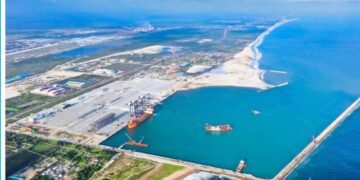






































The Nigeria Customs Service (NCS) TinCan Island Command, has set a new revenue record, raking in N16.4 billion in a single day through its newly deployed digital system, B’Odogwu.

The landmark feat, recorded on Tuesday, 19 August 2025, represents the highest daily revenue collection in the history of the Command.
Speaking on the development, Comptroller Frank Onyeka, Customs Area Controller of Tincan Island Port, commended the Unified Customs Management System (UCMS), popularly known as B’Odogwu, for streamlining operations and eliminating long-standing inefficiencies.
“Beyond the numbers, this achievement underscores how technology can deliver transparency, speed, and accountability at the ports.
“The B’Odogwu platform has enabled licensed Customs agents and stakeholders to process payments and clear cargoes in real time, without delays or bottlenecks,” the TCIP Customs boss remarked.
The system, launched earlier this year, integrates all major elements of port and Customs operations under a single digital interface.
From valuation to monitoring of cargo activities, officials say B’Odogwu ensures faster processing, accurate assessments, and a predictable operational environment.
According to Onyeka, the record haul also reflects the Command’s continued collaboration with critical stakeholders, including terminal operators, shipping companies, Customs agents, and regulatory agencies.
This synergy, he noted, is vital in making cargo clearance more seamless, compliant, and business-friendly.
With the African Continental Free Trade Agreement (AfCFTA) opening up new trade opportunities across the continent, Onyeka emphasized that modern systems like B’Odogwu will play a critical role in positioning Nigeria as a competitive hub for maritime commerce.
The command, he added, remains committed to balancing revenue generation with trade facilitation, ensuring that businesses can clear goods on time while government secures funds for national development.
As Customs celebrates this milestone, stakeholders will be watching closely to see if the Tincan Island Port can sustain such record-breaking collections.